
The issue of frozen Russian assets threatens to tear the European Union apart. Volodymyr Zelensky has long called for them to be used to continue supporting Ukraine against Russian aggression, but positions within the EU are divided. Hungary and Slovakia, highly sensitive to Moscow's position, oppose the possibility, particularly for financing military assistance, and have threatened to block or legally challenge the EU's plans in this regard. On the"pro-European" front, however, the most opposed country is Belgium, which hosts Euroclear and with it the majority of Moscow's assets – €180 billion – and fears having to return them, as required by international treaties, if the conflict ends and the Kremlin agrees to pay war reparations. This is the point that has generated the impasse in Brussels and which Germany attempted to break on Friday by launching an appeal to the other 26 member states:"Belgium cannot be left alone with its reservations, which are justified and are taken very seriously by the Chancellor," said Sebastian Hille, spokesman for German Chancellor Friedrich Merz.
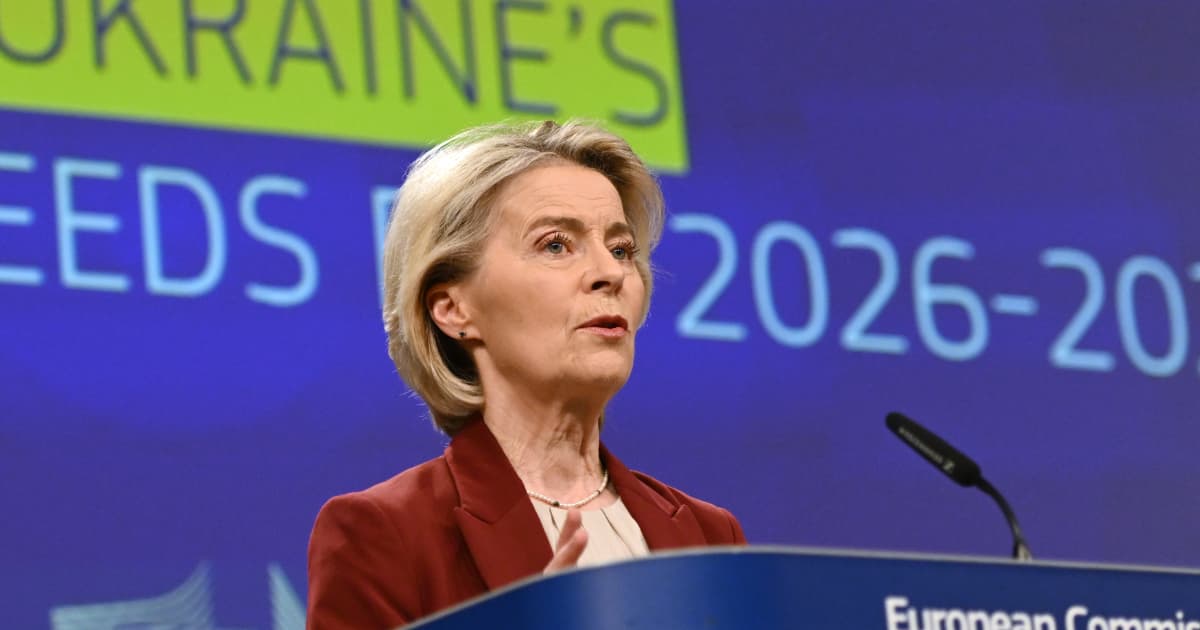
On December 3, the EU Commission presented two solutions: a loan drawn from the EU budget and a repair loan that would authorize the government to borrow up to €90 billion in liquidity from EU financial institutions holding the Russian Central Bank's frozen assets. There is one important difference: drawing on EU debt requires unanimity from the 27, while the use of assets, according to the Commission, requires a qualified majority. This is the point on which von der Leyen is currently trying to force the issue ahead of the European summit on December 18. The European Central Bank had initially put the brakes on explaining that it had no intention of guaranteeing any potential loan of 140 billion for the use of Russian assets, precisely because this would represent a violation of international law.
Bart De Wever's government has already made it known that it considers the proposal"unsatisfactory," so much so that Merz's spokesperson called for European solidarity to prevent the economic burden from falling entirely on Brussels. Asked whether Germany intended to shoulder part of the economic costs that would weigh on Belgium, the spokesperson replied:"The Chancellor said in an interview with a newspaper that the European members could also, in proportion to their economic strength, share the burden of the risks of this measure."
To try to reach a compromise, the Commission president met with Merz and De Wever in Brussels. Von der Leyen has put her name on the line regarding the use of frozen assets, supported by several European leaders. The chancellor, initially cautious, decided to embrace the cause a few weeks ago and may be called upon to explain to De Wever why the Germans believe the use of Russian assets does not entail excessive financial or legal risks.
The United States administration is also playing a role in this extremely delicate game. Donald Trump has long explained to (former?) allies that Washington intends to increasingly reduce its military and economic commitment to the defense of the Old Continent, making the use of frozen Russian assets an even more crucial resource in countering the advance of Moscow's armed forces in Ukraine. But the White House itself, Bloomberg reports today, is pressuring several EU countries to block the plan to grant a loan to Kiev financed with proceeds from frozen Russian assets. US officials argue that these assets are necessary to secure a peace agreement between Kiev and Moscow and should not be used to prolong the conflict.
The United Kingdom could now intervene in the matter. According to the London Times, Keir Starmer's government wants to unfreeze £8 billion (€9 billion) of frozen Russian assets in the country. According to the newspaper, the sum would cover more than two-thirds of Ukraine's financial needs over the next two years, both to continue the war and to finance reconstruction if a peace agreement is reached. However, as a government source points out, the exact mechanism for unfreezing the frozen Russian assets in the UK and handing them over to Ukraine has not yet been identified. Even at the recent NATO ministerial meeting in Brussels, British Foreign Minister Yvette Cooper pushed for a change in approach, stating that allied countries must work together on this dossier to arrive at a “ coordinated plan ”.
The key event remains the European summit on December 18. It is at that table that the Commission will seek the political consensus needed to begin the process of drafting the various regulations designed for loans to Kiev. Von der Leyen would like to see the first disbursements by the second quarter of 2026. But first, she will have to overcome a much greater obstacle: the EU's complete division over the issue of frozen Russian assets.