
7:50 p.m.
Pedro Barros Costa pedrocosta@negocios.pt
Oil prices plunge 7% after Iran attack seen as symbolic
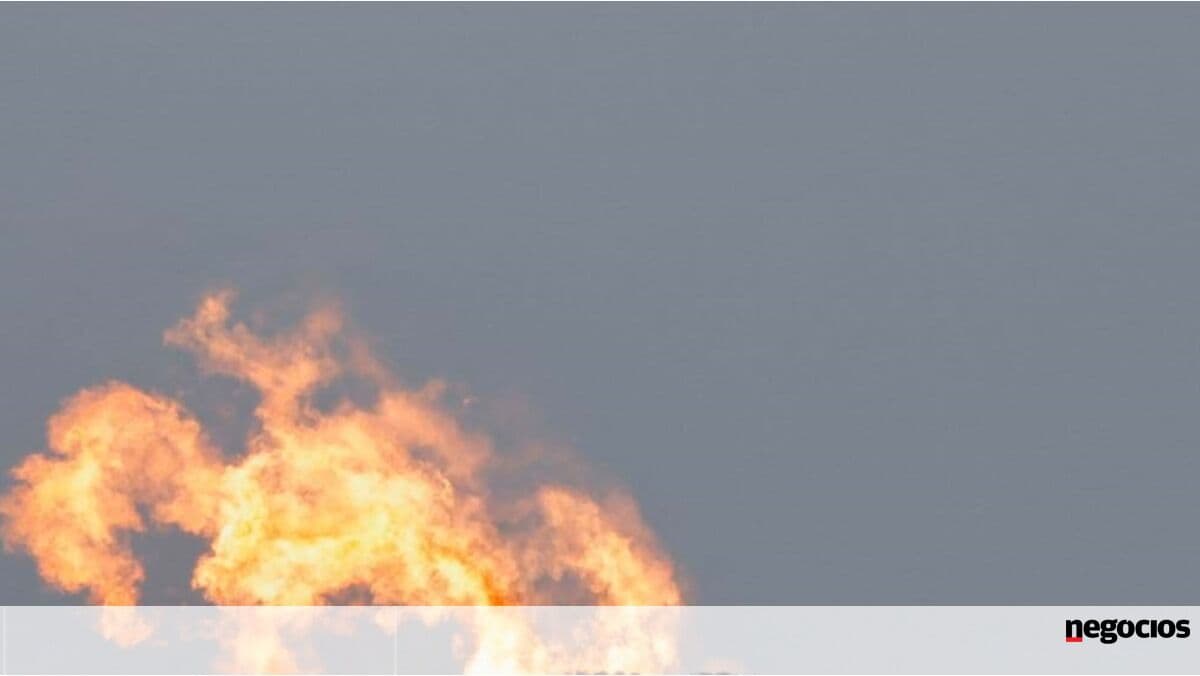
Oil prices are sinking after Iran retaliated with a missile attack on a US base in Qatar, which was intercepted without causing damage or injuries, according to Qatari authorities.
West Texas Intermediate (WTI), the US benchmark, fell 7.34% to $68.44, while North Sea Brent, the European benchmark, fell 6.78% to $70.36.
The sharp drop in oil prices is a sign that Iran's retaliation for the US attack on several of its nuclear facilities could focus on the US military presence in the region, rather than targeting critical infrastructure or tankers passing through the Strait of Hormuz, which has boosted crude prices, the Wall Street Journal said.
Furthermore, the attack is being seen by the US as symbolic, since US and Qatari authorities were warned in advance, which mitigated the impact of the offensive and reduced the potential escalation of the conflict, according to the New York Times.
Tehran claims attack on US base in Qatar
Iran claimed responsibility for an attack carried out on Monday against the Al-Udeid base in Qatar, one of the main US military installations in the Middle East.
The announcement was made on Iranian state television to the sound of martial music, the Associated Press (AP) news agency reported, and accompanied by an on-screen caption:"a powerful and successful response by the Iranian armed forces to the American aggression."
This decision comes after threats from Tehran to US military bases in the region, in retaliation for the bombings by US aircraft in the early hours of Sunday against nuclear facilities in the Islamic Republic.
Shortly before the announcement on state television, Iranian President Masoud Pezeshkian wrote on the social network X:"We did not start the war nor did we seek it. But we will not leave the invasion of great Iran unanswered."
17:52
Pedro Barros Costa pedrocosta@negocios.pt
Carla Pedro cpedro@negocios.pt
Iran attacks US military base in Qatar
In retaliation for US strikes on Iranian nuclear facilities this weekend, Iran launched several missiles at US military bases in the Middle East on Monday, Axios reported, citing a US official and an Arab official.
Six missiles were reportedly launched at US military installations in Qatar and one missile towards Iraq.
According to the website,"the White House and the Department of Defense are alert and closely monitoring potential threats to the Al Udeid base in Qatar," according to a US administration official.
Reuters reported that explosions were heard over the Qatari capital shortly after a credible threat was made against the US base. Qatar said the missiles were intercepted and did not cause any damage or injuries.
Qatar's foreign ministry said the government condemned the attack on the base, which had since been evacuated, by Iran's Revolutionary Guards."Qatar reserves the right to respond directly in an equivalent manner to the nature and scale of this brazen aggression," a spokesman wrote in X.
Qatar, due to the threat, had already closed its airspace for the safety of residents and tourists, and the US embassy had also warned Americans to take shelter and act with caution.
It should be remembered that Iran has stated several times that if the US joined this war and attacked its nuclear facilities, Tehran would retaliate against US forces in the region – and it should not be forgotten that the United States has bases in Qatar, the United Arab Emirates, Saudi Arabia and Bahrain – where it also has a naval fleet.
17:29
João Duarte Fernandes joaomfernandes@negocios.pt
Europe closes with contained losses awaiting Iranian retaliation against the US
Major European indexes closed mostly lower, with the exception of the Amsterdam stock exchange, as investors continued to analyze how Iran would respond to recent US strikes on the country's nuclear infrastructure. The Iranian regime has already promised to respond"proportionately and decisively."
The Stoxx 600 index - a benchmark for Europe - fell 0.28% to 535.03 points, when more significant losses were expected.
Among the main Western European indices, the German DAX fell 0.35%, the Spanish IBEX 35 fell 0.08%, the Italian FTSEMIB lost 1%, the French CAC-40 fell 0.69% and the British FTSE 100 slipped 0.19%. The Dutch AEX stood out from this scenario, posting gains of 0.91%.
On the geopolitical front, US President Donald Trump said the airstrikes had “obliterated” a trio of targets and threatened more military intervention if Iran did not seek to reach a peace agreement – a condition Tehran has already refused to negotiate while under attack.
In response, the Middle Eastern country warned that the attacks would have “eternal consequences”, as it tries to understand what a “proportionate” response from Iran would mean.
Attention remains focused mainly on oil, which has already risen more than 12% since the beginning of the conflict, due to concerns that Iran could interrupt tanker traffic through the Strait of Hormuz – through which about a fifth of the world's crude production passes.
“The key will be whether Iran tries and succeeds in closing the Strait of Hormuz,” Roberto Scholtes, chief strategy officer at Singular Bank, told Bloomberg.
The recovery in European indexes has stalled this month as the escalating conflict in the Middle East appears to be dampening risk appetite.
Concerns about renewed inflation have also returned as energy prices rise.
“Until now, the war has been very much centered in the Middle East, but with the US involvement, the situation looks much more serious and the risk is spreading in a very big way,” Aneeka Gupta, head of macroeconomic research at WisdomTree UK, told Bloomberg.
Among the sectors, utilities” (water, electricity, gas) recorded the greatest appreciation (+1.26%), followed by technology (+0.81%). On the other hand, the banking sector (-1.12%) and insurance companies (-1.02%) had the most significant losses.
Among market movements, Spectris – a British multinational manufacturer of precision instruments – shot up more than 15% after Advent – a US private equity firm – agreed to buy the British multinational for around £3.8 billion . Novo Nordisk fell more than 5% after the maker of Ozempic released disappointing results from trials of its latest weight-loss treatment, CagriSema.
17:39
Eurozone debt interest rates fall. Tension in the Middle East increases demand for safe assets
Interest rates on Eurozone sovereign bonds fell on Monday, in a sign that investors sought safe assets, such as bonds, following the worsening of tensions in the Middle East with the United States entering the confrontation with Iran.
After a pressured start to the session, the main European indices closed with moderate falls, accompanied by a general downward movement in public debt yields.
In Portugal, the ten-year rate fell 2 basis points, to 3.001%, while in Spain it fell 1.9 points, settling at 3.194%. French debt also saw relief, with a decline of 1.4 basis points to 3.228%, and Italian debt followed suit, falling 1.5 points to 3.479%. In Germany, the bloc's benchmark, ten-year"bunds" fell 1 basis point, to 2.505%.
Outside the Eurozone, British gilts fell 4.6 basis points to 4.490%.
16:34
João Duarte Fernandes joaomfernandes@negocios.pt
Iran vows to respond 'proportionately and decisively' to US strikes
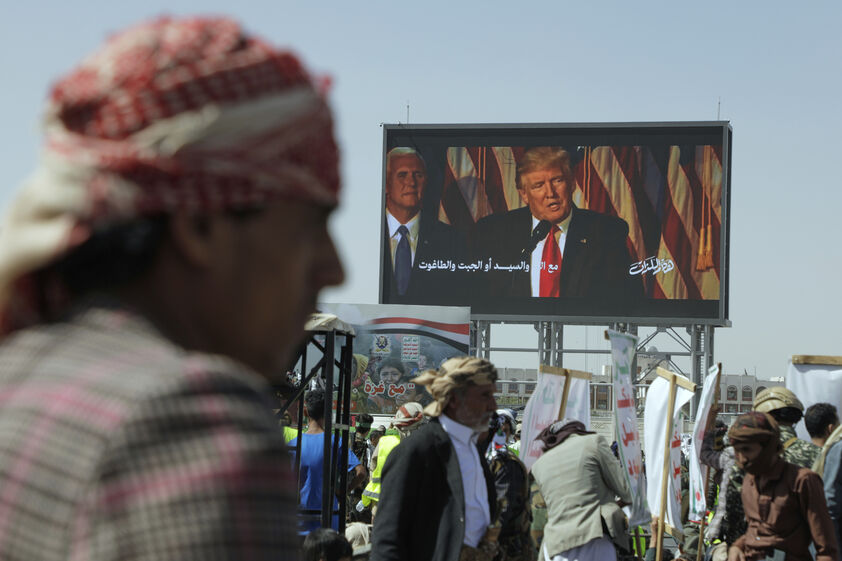
Iran said on Monday it would respond to US strikes on its nuclear facilities “proportionately and decisively,” according to Abdolrahim Mousavi, chief of staff of Iran’s armed forces, in a video posted on social media by Iran’s state broadcaster.
“Trump made a grave mistake in deciding to come to Netanyahu’s rescue,” Mousavi said, referring to the Israeli prime minister, adding that Iran “will continue to punish Netanyahu until we bring him absolute misery.”
On Sunday, Iranian President Masoud Pezeshkian had already argued that the US “must receive a response for its aggression”. Iran’s representative to the United Nations (UN), Amir Saeid Iravani, said during an emergency meeting of the international organization’s Security Council held yesterday that any response from Tehran would be decided by the country’s armed forces, which would consider a “proportionate response”.
15:53
João Duarte Fernandes joaomfernandes@negocios.pt
Volatile dollar recovers with increased demand as safe haven asset
The dollar continues to trade volatile this Monday, after reaching its highest level in almost a month, with the US attacks on Iran stimulating demand for the “greenback” as a safe haven asset, while at the same time weighing the economic risks associated with the rise in oil prices.
The dollar index – which measures the strength of the US currency against its main rivals – is up 0.14% at 98.843 points.
“The heightened level of geopolitical uncertainty and the risk of triggering another energy price shock are providing further support to the U.S. dollar in the near term, along with the Federal Reserve’s reluctance to resume rate cuts,” Lee Hardman of MUFG told Bloomberg.
At the same time, the dollar continues to appreciate against the yen, with reports that Israel launched a new attack on a key Iranian nuclear facility.
At this time, the Japanese currency continues to lose against the dollar, at a time when the “green note” has appreciated 0.41% to 146.690 yen.
The rapidly escalating conflict in the Middle East has boosted the dollar and the currency rebounded from a three-year low last week, posting its best weekly performance since late February.
Here, the single currency gained 0.07% to 1.153 dollars, while the pound traded with gains of 0.17% to 1.347 dollars.
15:43
Gold between gains and losses awaiting Tehran's response
Gold rose on Monday, supported by demand for safe haven assets due to escalating tensions between the United States, Iran and Israel. The precious metal rose 0.14% to $3,373.22 per ounce, after a session marked by several fluctuations and geopolitical uncertainty.
US forces have joined Israeli strikes on Iranian nuclear facilities, reigniting fears about stability in the Middle East. Despite this, Tehran's lack of an immediate response is holding back a sharp rise in the metal.
The yellow metal is used as a store of value in times of uncertainty. The lack of political risk associated with gold has led central banks to invest in the accumulation of the metal, which is now the second most popular asset for countries.
“Gold and the Swiss franc are the main potential beneficiaries of the increased uncertainty. Gold, in particular, could maintain its bullish trend thanks to growing demand as a safe haven. Central banks, which were already buying more gold, could increase these purchases. Gold is already consolidating its position as a strategic asset, second only to the dollar in terms of reserve volume,” says Gregor MA Hirt, global investment director for multi-assets at Allianz Global Investors, in a note consulted by Negócios.
15:26
João Duarte Fernandes joaomfernandes@negocios.pt
Oil falls nearly 1%. Drop coincides with Trump's calls to keep 'prices low'
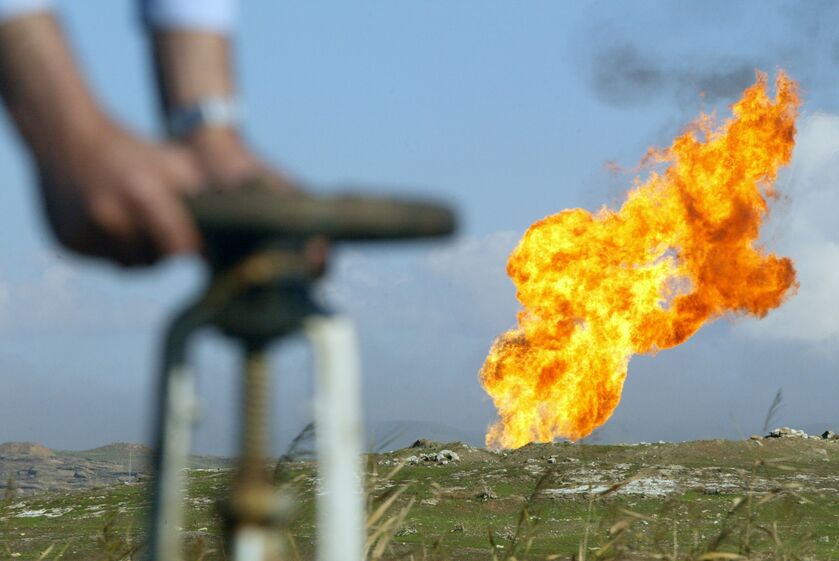
Oil prices continue to fall at this time, reversing the upward trend seen up until now, as concerns about a possible blockade of the Strait of Hormuz by Iran appear to be fading. The fall in crude oil prices coincides, at this time, with calls made a few moments ago by the President of the United States (USA), Donald Trump, who used his social network Truth Social to call for a halt to the appreciation of oil:" Keep prices low. I'm watching! You're playing into the enemy's hands. Don't do it!".
West Texas Intermediate (WTI) - the benchmark for the US - is currently down 0.95% to $73.14 per barrel. Brent - the benchmark for the European continent - is down 0.99% to $76.25 per barrel.
The US president also said that airstrikes carried out over the weekend had “destroyed” a trio of targets in Iran and threatened the country with further military action if Tehran did not seek a peace deal. In response, Tehran warned that US strikes on its nuclear infrastructure would have “eternal consequences”.
The oil market has been gripped by a growing turmoil since Israel attacked Iran more than a week ago, with oil benchmarks rising, options volumes soaring and the futures curve shifting to reflect fears of a possible short-term disruption to crude supplies.
The Middle East accounts for about a third of global production of “black gold,” and since Israel began attacking Iran, there are signs that shipments of Iranian oil out of the Persian Gulf have increased rather than decreased.
15:13
"Keep oil prices low!" Trump urges
The US attacks on Iran have raised fears about the future of the global oil market and Monday's session began with the price of a barrel rising. However, at a time when prices are already changing course, US President Donald Trump made an appeal:"Keep prices low. I'm watching! You're playing into the enemy's hands. Don't do it!"
The US leader used his social network Truth Social to call for a halt to the rise in oil prices. The price of Brent rose above $80 in early trading on Asian markets, but ended up not only easing but even entering positive territory, continuing to trade between gains and losses.
In addition to this post, Donald Trump made a second one in which he resorted to his slogan"drill, baby, drill", which refers to oil drilling."To the Department of Energy: DRILL, BABY, DRILL!!! And I mean: NOW!!!", he wrote.
2:38 p.m.
João Duarte Fernandes joaomfernandes@negocios.pt
Wall Street eases at the opening bell. Middle East conflict has limited effects
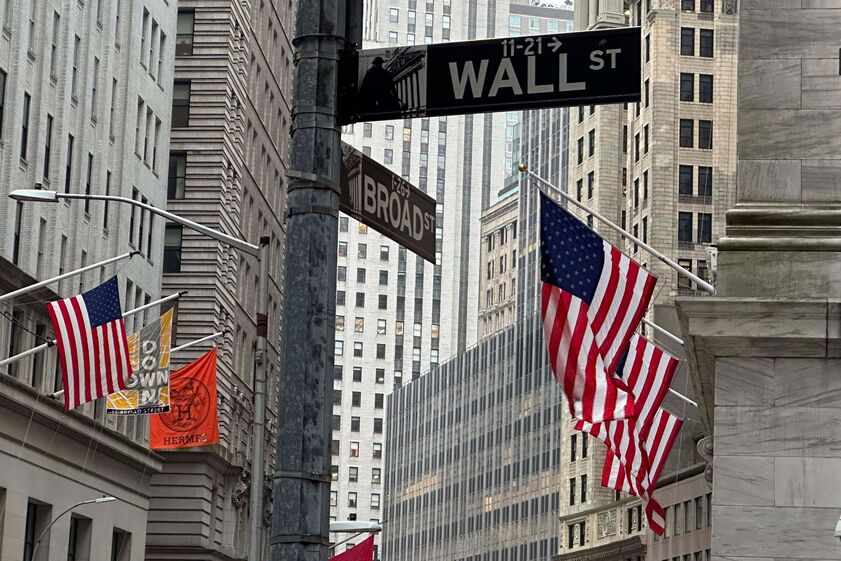
Major US indexes are trading with contained losses, while investors remain alert to the possibility that Iran could disrupt the flow of oil in the region in retaliation for US attacks on Iranian nuclear infrastructure.
The S&P 500 fell 0.07% to 5,963.85 points, while the Nasdaq Composite lost 0.38% to 19,373.94 points. The Dow Jones fell 0.04% to 42,191.24 points.
Crude oil, which has already risen by more than 10% since the start of the conflict between Israel and Iran, remains the main focus of attention, as any possible disruption to tanker traffic through the Strait of Hormuz raises concerns about rising energy prices and accelerating global inflation.
Still, “markets are thinking that [Iran’s] response to the U.S. strikes may not be as dramatic because Iran would risk antagonizing others that are not yet involved,” John Bilton, chief strategy officer at JPMorgan Asset Management, told Bloomberg.
The market reaction has been “muted” since Tel Aviv’s initial attack on Tehran. Even after falling over the past two weeks, the S&P 500 is now only about 3% below its all-time high hit in February.
Among the market movements, Hims & Hers Health - which operates in the telemedicine sector - continues to sink close to 30%, after the European giant Novo Nordisk ended its partnership with the North American company.
As for “big tech”, Alphabet fell 1.49%, Amazon fell 1.08%, Nvidia lost 0.95%, Microsoft fell 0.92%, Meta slipped 0.077% and Apple fell 0.42%.
1:20 p.m.
Barbara Cardoso barbaracardoso@negocios.pt
Oil rises 1%. Market believes Iran will give in and accept peace deal
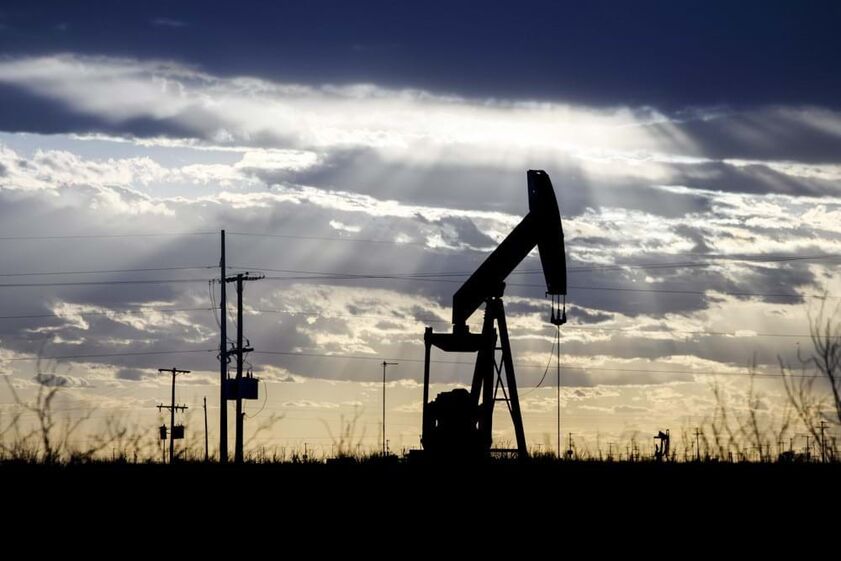
Oil prices continue to rise by around 1%, albeit with smaller gains than those recorded in early trading, as market fears of a disruption in the supply of the"black gold" begin to dissipate. Investors appear to believe that US involvement in the Middle East conflict will weaken Iran's ability to respond, putting pressure on the country to accept a peace deal.
The price of Brent crude for August delivery rose 0.86% to $77.67 per barrel, after rising 5.7% this morning to surpass $81, a five-month high. August contracts for West Texas Intermediate (WTI), the benchmark for US imports, rose 0.88% to $74.49 per barrel. Both have risen 11% since the first Israeli attacks.
The Middle East accounts for about a third of the world's crude oil output, but there has been no sign of disruption to physical oil flows, including cargoes passing through the Strait of Hormuz. Despite continued attacks between Israel and Iran, Tehran has yet to retaliate against the US offensive this weekend.
“Traders are holding their breath, waiting to see if Israel or Iran expands this conflict beyond military and political targets into energy trading,” Bob McNally, founder of Rapidan Energy Advisers and a former White House energy adviser, told Bloomberg Television. “So far, no one has pulled that trigger — and if they don’t, we could see prices reverse,” he warned.
Attention is also turning to the Strait of Hormuz, which could be closed permanently by Iranian forces. And the threats are already beginning to have an effect: this morning, three tankers carrying oil and chemicals diverted their route to avoid the strait, according to Al Jazeera. Japanese companies Nippon Yusen and Mitsui OSK Lines also said they were instructing their ships to minimize the time spent in the Gulf while continuing to transit the Strait of Hormuz.
12:45
For several world leaders, the “only way forward is diplomacy”
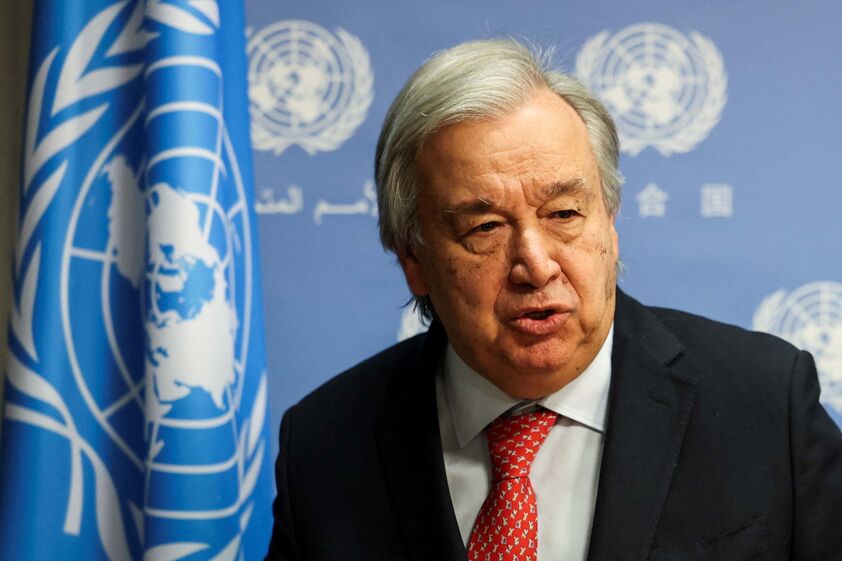
The US attacks on nuclear power plants in Iran in the early hours of Sunday morning have returned ignite reactions and opinions on the future of the Middle East conflict are united in request for “diplomacy”.
Antonio Guterres, Secretary-General of the United Nations, admitted to being “ seriously concerned ” with the worsening of the situation, in a publication on X: “There is a growing risk that this conflict could quickly spiral out of control, with catastrophic consequences for civilians, the region and the world ”. Guterres considers that “there is no military solution” and that the “ the only way is diplomacy ”, calling on member states to unite to “de-escalate” rivalries.
On the British side, Keir Starmer also suggests a diplomatic solution with the participation of all sides , with priority on stabilizing animosities. Still, the British Prime Minister considers that the Iran's nuclear program poses a “grave threat to global security” and that “the United States has taken action to alleviate this threat.”
THE China condemns US attacks and describes them as a serious violation of international law, calling on all parties, especially Israel, to reach an agreement cease fire and engage in dialogue to ease tensions. “China is ready to work with the international community to join forces and uphold justice, as well as contribute to the work of restoring peace and stability in the Middle East,” China’s Foreign Ministry wrote in a statement.
12:13
Barbara Cardoso barbaracardoso@negocios.pt
Russia to support Iran, Putin says US attack 'unfounded'
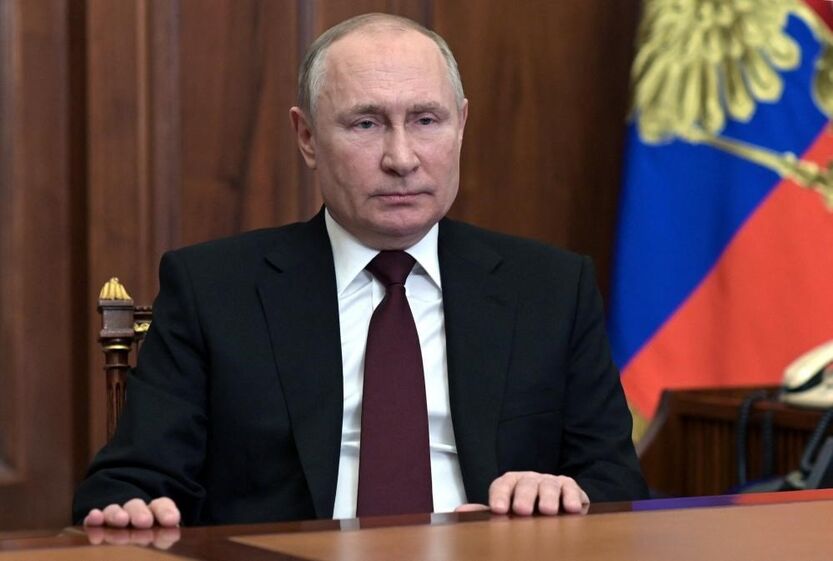
Russian President Vladimir Putin told Iran's foreign minister there was no justification for the weekend's "baseless" US strikes, and has already demonstrated the Kremlin's willingness to help the Iranian people.
Putin received Foreign Minister Abbas Araqchi in Moscow two days after US President Donald Trump launched strikes on Iran's three main nuclear facilities."I am very glad that you are in Moscow today. It will give us an opportunity to discuss all the pressing issues and think together about how we can get out of the current situation," the Russian president said.
The minister thanked Russia for its support, stressing that Iran has acted in self-defense."Russia is today on the right side of history and international law," Araqchi said.
This morning, Kremlin spokesman Dmitry Peskov said that Russia deeply regrets and condemns Sunday's attacks. Speaking to reporters, Peskov added that the US attacks have opened the door for new parties to join the conflict and have triggered a new spiral in the escalation of the conflict in the Middle East. The Kremlin also says it is not yet certain whether there is indeed a radiation risk following the US attacks.
Although Putin has already said he will help Iran, he has not given details on how he will do so. Tehran is an important ally of the Kremlin, as Russia signed a strategic partnership treaty with Iran in January this year. Although it does not include a mutual defense clause, Moscow had warned before Saturday's US strikes that an American military intervention could destabilize the entire region and plunge it into"the abyss."
11:41
Barbara Cardoso barbaracardoso@negocios.pt
Iran calls Trump a"gambler" and warns: "We will be the ones to put an end" to the war
After a weekend of successive attacks by the US and Israel on Iran - which has retaliated with missiles against Israel - Tehran left a response directed at US President Donald Trump.
Iran said this morning that the strikes on its nuclear facilities expanded the range of legitimate targets its military forces can now strike, and even called Trump a"gambler" for joining Israel's military campaign against the Islamic Republic.
"Mr. Trump, the gambler, you can start this war, but we will be the ones to end it," Ebrahim Zolfaqari, spokesman for Iran's central military headquarters, said in a video statement.
On Sunday morning, Washington surprised the world by announcing that it had launched strikes on three Iranian nuclear plants. Since then, promises of retaliation have been pouring in. Although it has continued to fire missiles at Israel so far, Iran has yet to take action against the United States — whether it be striking American bases or targeting 20 percent of the world’s oil flow through the Strait of Hormuz.
The Trump administration has repeatedly stressed that the White House's goal is to destroy Tehran's nuclear program, but not to expand the war. The US president has brought another scenario to the table: regime change in Iran.
On his social media platform, Truth Social, Trump wrote:"It is not politically correct to use the term 'regime change', but if the current Iranian regime is not capable of making Iran great again, why wouldn't there be regime change???"
11:39
EU warns of risk of closure of Strait of Hormuz
The European Union's High Representative for Foreign Policy, Kaja Kallas, warned on Monday that the Iranian threat to close the Strait of Hormuz is extremely dangerous.
In response to Saturday's US strike, the Iranian parliament demanded the closure of the Strait of Hormuz, through which 20% of seaborne crude oil passes, although the final decision rests with Iran's Supreme National Security Council.
Speaking on arrival at the Foreign Affairs Council in Brussels, Kallas said that ministers will discuss the situation in Iran following the US attack and that they are focused on a diplomatic solution, while assessing the consequences of the worsening conflict.
"The Iranian parliament has demanded the closure of the Strait of Hormuz, which would be extremely dangerous and would not be good for anyone", he stated.
Kallas also said that the European Union has always been in favor of diplomacy and recalled that the European bloc spoke with the Iranian government on Friday.
In the same contact, Kallas said, Iran showed itself available to talk about the nuclear issue and also about broader security issues that concern Europe.
"We have to continue to do so because in the end there has to be a diplomatic solution to have a long-term perspective," Kallas added.
The European Union's foreign minister also recalled that the international agreement on Iran's nuclear program includes a reversal clause that allows for the automatic imposition of international sanctions on Iran if Tehran violates the terms of the treaty.
"If everyone agrees that Iran should not have a nuclear weapon, then we have to work towards that," he said.
Spanish Foreign Minister José Manuel Albares also called on the European Union to show courage in"hoisting the flag of peace", defending international law, diplomacy and negotiation.
French Foreign Minister Jean-Noel Barrot also called for what he considered to be a fundamental role for Europe in achieving, through negotiations, a"lasting, solid and verifiable reversal over years and decades" of the Iranian nuclear program.
Barrot also said that the goal"is not just" to temporarily delay Iran's access to nuclear weapons, but to advocate negotiations to ensure that Iran never has nuclear weapons.
The head of French diplomacy stressed that France rejects any attempt to organize a regime change in Iran by force, because, he said, it would be illusory and dangerous to think that such a change can be achieved"by bombs".
Lithuanian Foreign Minister Kestutis Budrys said the European Union must organize itself to pressure Iran"towards the path of peace" and prevent the conflict from escalating further.
"The time has come for Iran to choose whether it wants to be a good member of the international community or continue its destructive policies in the region and globally. Iran's possession of nuclear weapons is an existential threat to Israel and a grave threat to the entire international community," Budrys said.
11:05
Euribor drops at three and 12 months and rises at six months
Euribor fell today at three and 12 months, rose at six months and remained above 2% in all three terms.
With today's changes, the three-month rate, which fell to 2.031%, remained below the six-month (2.036%) and 12-month (2.093%) rates.
The six-month Euribor rate, which in January 2024 became the most widely used in Portugal for variable-rate housing loans, rose today, being set at 2.036%, up 0.001 points.
Data from the Bank of Portugal (BdP) for April indicate that the six-month Euribor represented 37.61% of the stock of loans for permanent homeownership with variable rates.
The same data indicate that the 12-month and three-month Euribor represented 32.46% and 25.60%, respectively.
In the opposite direction, in the 12-month period, the Euribor rate fell, being fixed at 2.093%, 0.008 points less than on Friday.
The three-month Euribor, which was below 2% between May 30 and June 12, also fell today, to 2.031%, down 0.003 points.
In May, the monthly Euribor averages fell again in the three terms, less intensely than in previous months and more sharply in the shorter term (three months).
The Euribor average in May fell 0.162 points to 2.087% at three months, 0.086 points to 2.116% at six months and 0.062 points to 2.081% at 12 months.
At its last monetary policy meeting on 4 and 5 June in Frankfurt, the European Central Bank (ECB) cut interest rates by 0.25 basis points, with the main policy rate falling to 2%.
This reduction was the eighth since the ECB began this cycle of cuts in June 2024 and, according to analysts, it should be the last this year.
The ECB's next monetary policy meeting is scheduled for July 23-24 in Frankfurt.
Euribor is set by the average of the rates at which a group of 19 eurozone banks are willing to lend money to each other on the interbank market.
10:18
Pedro Curvelo pedrocurvelo@negocios.pt
European stock markets adrift as they wait for a beacon in the Middle East
The main European markets are trading without a defined trend on Monday morning, with investors trying to understand what the next steps will be in the conflict between Israel and Iran and, above all, whether Tehran will retaliate against the United States, which this weekend participated in attacks on nuclear facilities in Iranian territory.
The pan-European Stoxx600 index rose 0.05% to 536.79 points, with the oil & gas sector rising 0.11%.
The German DAX30 slipped 0.02%, while the Parisian CAC-40 fell 0.08%. The Spanish IBEX-35 advanced 0.14% and the British FTSE-100 rose 0.04%.
The most significant gains were recorded in Amsterdam, with the AEX gaining 0.66%, while the Italian FTSEMib lost 0.55%.
The morning's highlight was shares in Spectris, a British maker of precision and testing equipment and software. The company's shares jumped 15% to 37.74 pounds after private equity firm Advent made an offer to buy the company and Spectris management called the offer"fair and reasonable."
The deal will close for £3.8 billion (€4.4 billion at current exchange rates). Advent is offering £37.63 per share, an 85% premium to Spectris's share price on June 6, the last trading session before Bloomberg reported Advent's interest in Spectris.
09:55
Eurozone interest rates rise with Iran in sight
Eurozone sovereign debt interest rates are rising on Monday, with attention focused on Tehran's response to the US's involvement in attacks on Iran's nuclear facilities. Despite the uncertainty, investors are still investing in the stock market.
The yield on 10-year Portuguese debt rose 2.1 basis points to 3.042%, while in the neighbouring country interest rates rose 2.3 points to 3.236%. Also in the south, the yield on Italian debt rose 2.4 points to 3.518%.
The interest rates on German Bunds, a benchmark for the region, have worsened more sharply, rising three basis points to 2.544%. The French yield has also risen three points to 3.272%.
Outside the Eurozone, British gilts saw interest rates rise 2.1 points to 4.557%.
09:19
Pedro Curvelo pedrocurvelo@negocios.pt
Oil eases climb as markets await Iran's response
Oil prices significantly eased the sharp rises recorded during the Asian session, when they climbed 5.7% following the US entry into the conflict between Iran and Israel.
Traders are awaiting Tehran's response to the US intervention, but for now fears of a major disruption in crude supply appear to have dissipated.
The Brent barrel for delivery in August rose 0.38% to $77.30 per barrel, after having soared 5.7% and surpassed $81, the highest since January.
August West Texas Intermediate (WTI) contracts rose 0.39%, trading at $74.13 per barrel.
“Traders are starting to think there’s nothing here: Prices have gone up $10 a barrel since the war started, now a little bit more, and so I think the amount of risk built into prices is appropriate,” Bob McNally, founder of Rapidan Energy Advisers, told Bloomberg.
09:05
Pedro Curvelo pedrocurvelo@negocios.pt
Gold yields despite Middle East escalation. Dollar is preferred safe haven
The price of gold fell on Monday despite the escalation of the conflict between Iran and Israel with the US joining the attacks against the Tehran regime. After rising by 0.8% at the start of trading, the yellow metal lost strength and is now down 0.32%, to $3,357.48 per ounce.
Investors are waiting for Tehran's response before betting on gold to mitigate risks.
The US currency is emerging as the safe haven asset of choice, with an eye on Iran's reaction to Washington's participation in attacks on the country's nuclear facilities.
The euro lost 0.22% against the US currency, trading at 1.1498 dollars.
The"green note" also gained ground against the yen, advancing 0.86% to 147.3400 yen, as well as against the Swiss currency, with a gain of 0.11%, to 0.8169 Swiss francs.
07:41
Barbara Cardoso barbaracardoso@negocios.pt
Middle East war plunges Asia and Europe into the red. China escapes
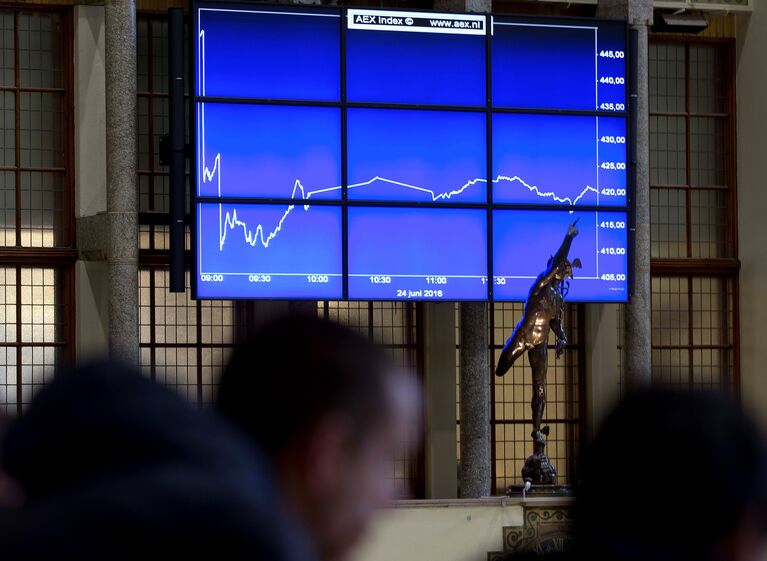
Asian stock markets ended the first session of the week in mixed territory, at a time when investors were reacting for the first time to the successive attacks between Iran-Israel-US this weekend. Washington decided to join Israel and attack three nuclear plants in Tehran, while this morning Israel targeted other Iranian military complexes. The market is now cautiously awaiting Iran's response, which has already promised"eternal consequences" to both countries.
“This kind of uncertainty is quickly becoming the new normal for markets, so I expect to see a relative sense of calm unless tensions continue to escalate, which they have the potential to do,” Josh Gilbert, market analyst at eToro, told Bloomberg. “Even without an immediate selloff, the mix of oil volatility and renewed uncertainty will likely be enough to keep risk appetite subdued,” he added.
Oil continued to attract attention, as any disruption to traffic through the Strait of Hormuz could send energy and fuel prices soaring.
Should Iran strike back,"the market will be very, very reactive to military developments in the region - in stocks, bonds and currencies - because we don't know exactly how this is going to play out," said Ben Zala, a professor of international relations at Monash University in Melbourne.
Among the top market movers, shipping stocks such as Ningbo Marine Corp and Nanjing Tanker Corp rose 10% and 8%, respectively, on speculation that tanker freight rates could rise after U.S. airstrikes in Iran. Asian defense-related stocks rose, while airline stocks fell on rising oil prices.
Shares in Taiwan Semiconductor Manufacturing (TSM) fell after the Wall Street Journal reported that the US Commerce Department had told major semiconductor companies it planned to revoke exemptions they had used to access US technology in China. Samsung fell more than 2%.
However, in China, the impact was less felt: the Shanghai Composite rose 0.5% and the Hang Seng in Hong Kong gained 0.4%. In Japan, the Topix lost 0.4% and the Nikkei fell 0.2%. The Australian S&P/ASX 200 also fell 0.3%.
In Europe, the outlook is also pessimistic. Euro Stoxx 50 futures point to a 0.5% drop. due to escalating tensions in the Middle East. Traders will also look at eurozone economic activity data on Monday to assess whether the US trade war has hurt factory output ahead of a July 9 deadline for reciprocal tariffs. European Central Bank President Christine Lagarde is also expected to speak.