

Egypt's State Information Service denied on Wednesday that the country is coordinating with Israel to reopen the Rafah crossing for Gazans in coming days.
"If an agreement is reached to open the crossing, it will be in both directions, to enter and exit the Gaza Strip, in accordance with the plan of US President Donald Trump," the state information service said in a statement, quoting an official Egyptian source.
The denial came hours after the Israeli defence ministry body that oversees civil affairs in the Palestinian territories on Wednesday said authorities would reopen the Rafah border crossing to enable Gaza residents to exit to Egypt.
"In accordance with the ceasefire agreement... the Rafah Crossing will open in the coming days exclusively for the exit of residents from the Gaza Strip to Egypt," the Coordinator of Government Activities in the Territories (COGAT) said in a statement.
COGAT added that the crossing would operate under the supervision of the EU's Border Assistance Mission,"similar to the mechanism that operated in January 2025", when the crossing was briefly opened during a six-week truce.
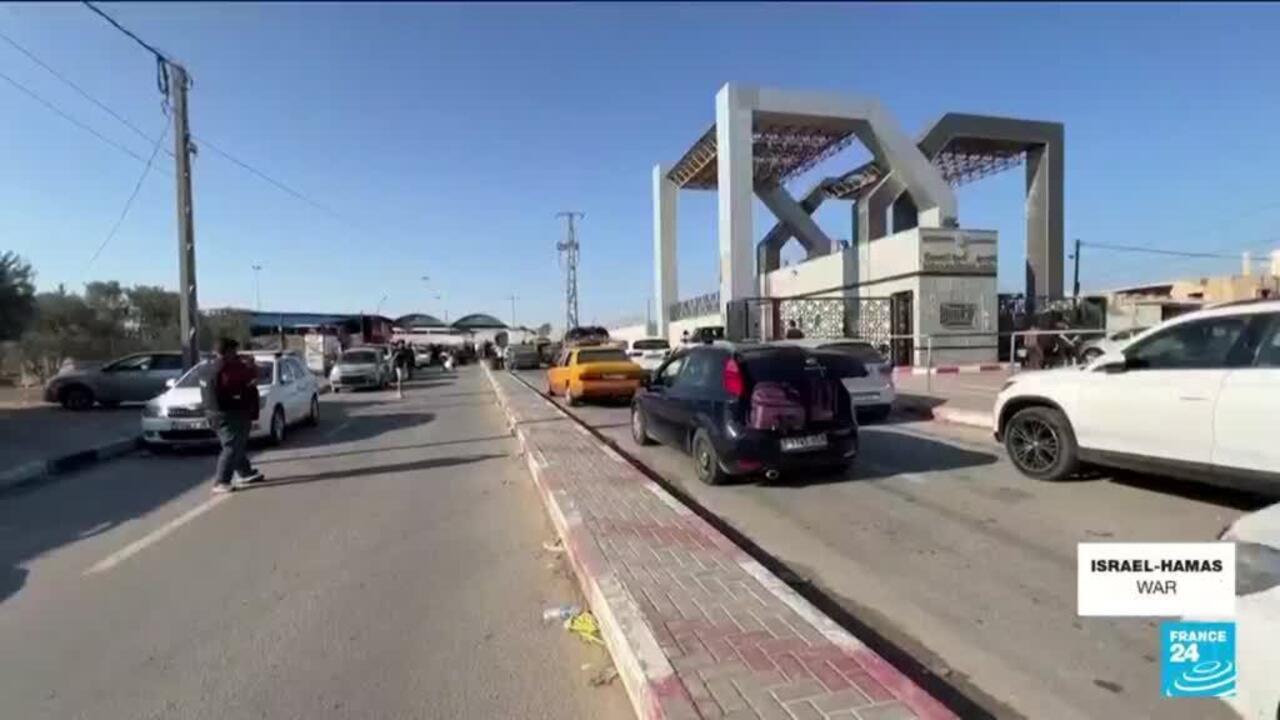
Two European diplomatic sources said they had originally been preparing for the crossing's opening for pedestrians on October 14 after a similar announcement, before the opening was delayed.
Reopening the Rafah crossing is a part of Trump's peace plan for the Palestinian territory, as well as something UN agencies and other humanitarian actors have long called for.
The Israeli army took control of the Palestinian side of the crossing in May 2024, claiming that it was being"used for terrorist purposes", with suspicions of arms trafficking.
It was briefly reopened during the ceasefire between Israel and Hamas that took effect on January 19, initially allowing the passage of people authorised to leave Gaza, and later of trucks.
The Rafah crossing is a crucial entry point for humanitarian workers and for lorries transporting aid, food and fuel, which is essential for daily life in a territory deprived of electricity.
The crossing has long been the main exit point for Palestinians from Gaza who were authorised to leave the narrow strip of land, which has been under Israeli blockade since 2007.
Lebanese and Israeli officials hold talks, source says
Lebanese and Israeli civilian representatives held their first direct talks on Wednesday in decades, part of a year-old ceasefire monitoring mechanism in the war with Hezbollah, a source close to the talks said.
The meeting took place at the UN peacekeeping force's headquarters in Lebanon Naqura near the border with Israel, the source said. Morgan Ortagus, the US Special Representative for Lebanon, was present at the talks.
Earlier Wednesday, Israeli Prime Minister Benjamin Netanyahu's office said he would send a representative to Lebanon in a bid to establish a relationship and economic cooperation with Beirut.
While Lebanon remains officially in a state of war with Israel, Lebanese President Joseph Aoun has said in recent months that he is open to negotiations
Israel and Lebanon agreed to a US-brokered ceasefire in 2024 that ended more than a year of fighting between Israel and Lebanese armed group Hezbollah. Since then, they have traded accusations over violations.
Israel has continued air strikes on what it says are Hezbollah's efforts to rebuild its military capabilities in breach of the truce. Lebanon says Israel's bombardment and occupation of hilltop positions in south Lebanon are breaches.