
Last Updated:
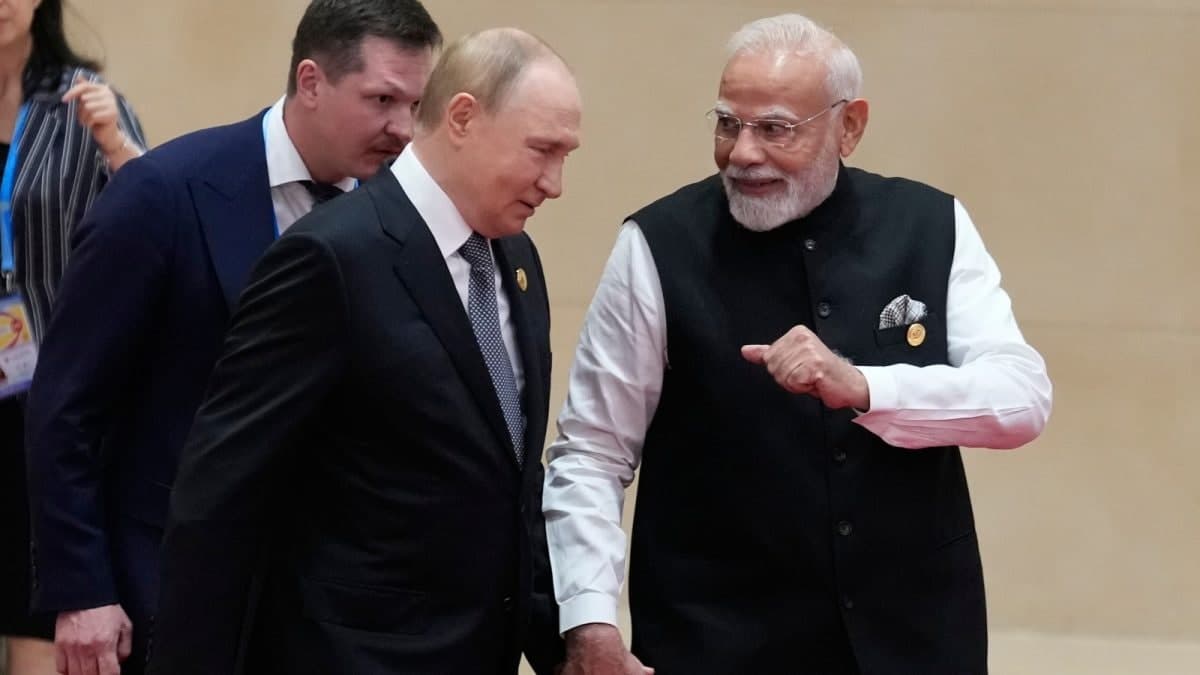
The 23rd India–Russia Annual Summit in New Delhi will be Russian President Vladimir Putin’s first visit to India in 4 years, and his first since the start of the Ukraine conflict.

The 23rd India–Russia Annual Summit in New Delhi on December 4–5 will be Russian President Vladimir Putin’s first visit to India in four years, and his first since the start of the Ukraine conflict.
For New Delhi, it comes at a moment when the government is trying to protect its strategic autonomy, manage pressure from Washington and other Western capitals, and still lean on Moscow for critical defence supplies, crude oil and fertilisers. For Moscow, it is a chance to reaffirm a “special and privileged strategic partnership" with one of its most stable long-term partners and to lock in new economic arrangements that work around sanctions and a fragmenting global order.
Senior officials on both sides have signalled that this will not be a purely symbolic engagement. Alongside a state banquet and the formal summit between Putin and Prime Minister Narendra Modi, New Delhi and Moscow are preparing agreements that cut across defence, energy, mobility, health care, logistics, payments and business ties.
Putin will be accompanied by Defence Minister Andrei Belousov and a high-level delegation representing business and industry, signalling the importance Moscow is placing on the summit.
A Partnership Built Through Annual Summits
The Kremlin has described the India–Russia relationship as one rooted in trust and continuity. During a briefing in New Delhi, Russian spokesperson Dmitry Peskov said Russia has stood “shoulder to shoulder" with India through important phases of nation-building, adding that this continuity remains central to Moscow’s foreign policy.
Indian officials have pointed to the role of annual summits in sustaining momentum even during periods of global turbulence. Putin first visited India in 2000, and this will be the 23rd edition of the summit mechanism.
Bilateral trade between India and Russia stood at USD 68.7 billion in FY 2024–25, according to data cited in the Indian Express report, with India exporting USD 4.9 billion worth of goods and importing USD 63.8 billion, largely due to energy purchases. Both sides have stated a target of USD 100 billion in trade by 2030.
Defence Cooperation And Logistics Agreements
Defence is expected to be one of the most sensitive and closely watched parts of the agenda. India is likely to push for accelerated delivery of additional S-400 Triumf long-range air-defence systems already contracted, as well as clearer timelines and assurances on spares and upgrades for existing Russian-origin platforms across the Army, Navy and Air Force.
Peskov said that the sale of additional S-400 units was “highly on the agenda and this could be discussed," adding that “Russian arms 36% in Indian armed forces and hopefully will continue."
Future platforms will also come up. The next-generation Su-57 fighter programme is expected to be discussed as a longer-term option. Peskov said, “SU-57 is the best plane in the world. SU57 will be on the agenda."
Peskov also highlighted long-standing cooperation on high-technology systems, saying, “As far as our cooperation in the defence industry goes, let’s remember famous BrahMos missiles. It’s not only just production, or it’s not only acts of buying or selling, it’s exchange of high technologies, and it really paves the way for a bright future in this field of cooperation."
Rather than rely only on off-the-shelf purchases, New Delhi is looking to expand co-development and joint manufacturing – in missiles, submarines, aviation and other defence technologies – in line with its push for greater self-reliance in defence supplies.
A major pre-visit signal came from Moscow when Russia’s State Duma, the country’s lower house of parliament, on Tuesday approved the Reciprocal Exchange of Logistic Support (RELOS) pact. Signed in February this year, this military logistics agreement allows both countries’ aircraft, warships and personnel to use each other’s facilities for joint exercises, training, humanitarian missions and disaster-relief operations. It was forwarded to the lower house for ratification last week by Russian Prime Minister Mikhail Mishustin, completing one of the final procedural steps required for it to come into force.
Duma Speaker Vyacheslav Volodin described the move as reaffirming the “strategic and comprehensive" nature of India–Russia ties. “Our relations with India are strategic and comprehensive, and we value them. We understand that today’s ratification of the agreement is another step toward reciprocity and, of course, the development of our relations," Volodin stated while addressing lawmakers.
Kremlin spokesperson Dmitry Peskov has also praised New Delhi’s position on the Ukraine conflict, highlighting Modi’s line that “this is not an era of war", and contrasting India’s willingness to engage on difficult issues with what he described as a lack of dialogue with Europe. On Russia’s ties with Beijing, he has said Moscow wants to deepen cooperation with China “as far as India allows", while stressing that its relationships with India and China are on independent tracks.
Energy And Nuclear Projects On The Table
Energy is expected to feature prominently. Peskov said Russia continues to supply crude oil to India at competitive prices, calling the arrangement a “mutual benefit". Indian officials have maintained that India’s energy purchases are commercial decisions taken by companies.
Civil nuclear cooperation is another major area. Peskov said Russian collaboration has helped create a “sectoral ecosystem" within India’s nuclear industry. He added that there was the possibility of an agreement on nuclear energy during the visit, saying, “There will be an offer for small reactor… Russia has real experience in producing small reactors… we were deeply involved in creating a sector of peaceful nuclear energy in India, in Kudankulam, and so we were hoping for continuation of this project."
Both sides are expected to review progress on existing civil nuclear projects and may also discuss cooperation on small or modular reactors.
Trade, FTA Talks And The Business Forum
Economic engagement will be a major area of focus. A two-day India–Russia Business Forum will take place in New Delhi during the visit, bringing together industry bodies such as FICCI and Russian partners. The forum will concentrate on widening Indian exports and expanding sectoral cooperation in pharmaceuticals, machinery, agriculture, electronics and services. Other discussions are set to cover engineering exports, increased Russian imports of Indian pharmaceuticals and food products, and collaboration in digital services.
A key economic deliverable under discussion is the proposed India–Eurasian Economic Union Free Trade Agreement. The first round of negotiations was held last year. Officials in the Ministry of External Affairs have stated the intent is to “have the agreement soon". The agreement is expected to increase market access for both sides once finalised.
Fertiliser imports remain a central component of India’s trade with Russia, with New Delhi sourcing 3–4 million tonnes annually. Both sides are considering ways to deepen this partnership to support long-term agricultural security.
Payments, Connectivity And Local Currency Arrangements
Trade payments between India and Russia have become increasingly de-dollarised, with settlements routed through currencies such as the UAE dirham, the rupee and the yuan. As per an ET report, discussions include the possibility of formalising a new payment framework using the dirham or linking Russia’s SPFS messaging system with Indian platforms such as RuPay. The two governments have confirmed that an understanding on rupee–rouble mechanisms is already in place.
Connectivity projects are also expected to be reviewed. The Chennai–Vladivostok maritime corridor, India’s interests in Iran’s Chabahar port, and nodes of the International North–South Transport Corridor are all expected to figure in talks, alongside India’s decision to expand its consular footprint in Russia with new consulates in Kazan and Yekaterinburg.
Mobility, Labour Movement And Health Cooperation
Mobility agreements have emerged as another major area of cooperation. India and Russia have finalised an agreement covering the movement of skilled and semi-skilled workers. The document is undergoing internal procedures and is expected to ease labour mobility. Russian authorities are increasing their intake of specialised manpower.
Indian officials have urged citizens working abroad, including in Russia, to be cautious about contracts. Most Indian nationals who inadvertently joined the Russian Army have been repatriated, and the remaining cases are expected to be resolved. Officials have noted that India does not have a centralised system to track its citizens working overseas, and information often emerges through media queries or disclosures from host countries.
Health cooperation is also being strengthened. Both governments are preparing frameworks to increase collaboration in pharmaceuticals and medical technology. Plans include expanding Indian exports of medicines and devices, promoting local manufacturing by Indian firms in Russia, and jointly developing modern pharma and MedTech units. These initiatives aim to support resilient healthcare systems.
Counter-Terror And Broader Consultations
top videos
Security consultations at the summit will range from bilateral projects to regional and global issues. Alongside defence and nuclear talks, the two sides will review an existing joint counter-terrorism mechanism that has been active since 2002.
In the run-up to the visit, Peskov condemned the recent blast in Delhi and reiterated Moscow’s support for India’s fight against terrorism. He said, “We condemn terrorism… our country had suffered a lot… India has faced this threat many times… only way to combat terrorism is to have international cooperation."
About the Author

Karishma Jain, Chief Sub Editor at News18.com, writes and edits opinion pieces on a variety of subjects, including Indian politics and policy, culture and the arts, technology and social change. Follo...Read More
tags :
India-Russia tiesVladimir Putin
 Click here to add News18 as your preferred news source on Google.
Get theLatest India News along with detailed National Updates. Explore the latest updates on World News, Politics, City News, Explainers, and Expert Opinion. Follow News18 on Google. Join the fun, play games on News18. Download the News18 App to stay updated!
view comments
Location :
First Published:
December 03, 2025, 09:23 IST
News explainers What To Expect From Putin’s India Visit: Defence, Energy And Trade On The Table
Disclaimer: Comments reflect users’ views, not News18’s. Please keep discussions respectful and constructive. Abusive, defamatory, or illegal comments will be removed. News18 may disable any comment at its discretion. By posting, you agree to ourTerms of Use and Privacy Policy.
Loading comments...