
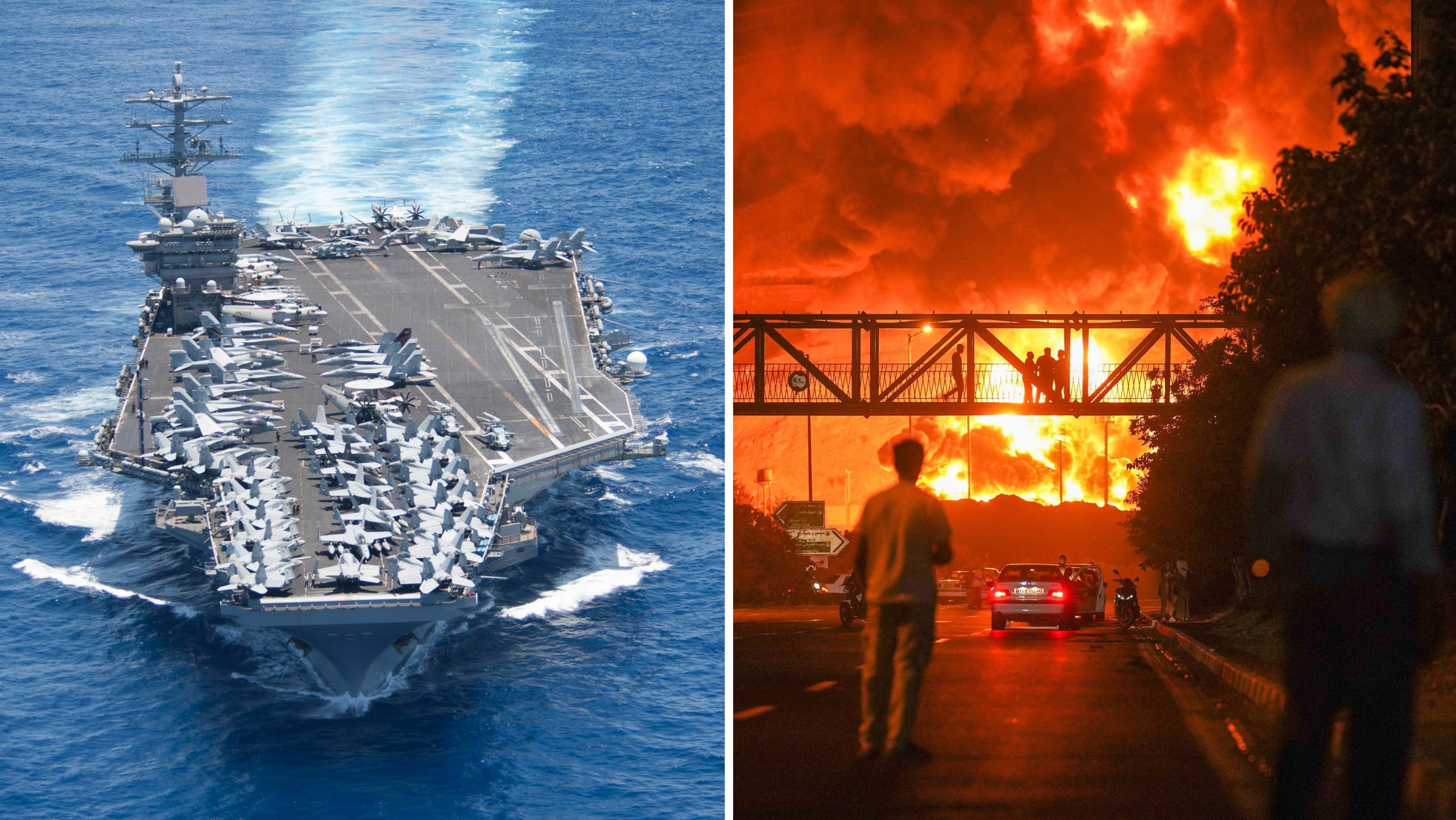
Tehran has once again repeated its threat to completely close the Strait of Hormuz to shipping.
This would result in the price of oil rushing to unprecedented levels – up to 300 USD/barrel, according to calculations by Daniel Spiros and Henrik Wachtmeister, both researchers at Uppsala University.
The world economy would be plunged into a deep recession.
– We would enter a very serious recession globally. All energy prices would go up a lot, not least gasoline and diesel and thus also other types of energy. This means that we would have very high inflation at the same time as production would come to a standstill, says Daniel Spiro, senior lecturer and associate professor at the Department of Economics.
The risks of Iran Daniel Spiro believes that making a difference is small.
– Then both Saudi Arabia and the US would get involved in the conflict. I don't think Trump would accept Iran blackmailing the world in that way. I don't think Iran dares, nor do they have the capacity.
American involvement – the biggest risk
Although he assesses the risks of the Strait of Hormuz being closed as small, the escalation of the war is worrying.
Donald Trump chose to leave the G7 meeting early and it was reported overnight that an emergency meeting is being prepared in the so-called"situation room" with the National Security Council when he returns to the White House.
And in addition to the large American aircraft carrier USS Nimitz, the United States is sending a large number of tanker aircraft to Europe.
– The greater risks are if the war becomes so extensive that the US intervenes so that there is actually warfare around the Persian Gulf. Then it will be very difficult to transport oil.
“One of the last cards Iran has”
Since 1980, the US has had a stated policy of using military means to protect its interests in the Persian Gulf. Should Iran attack oil tankers, close the strait, or otherwise attack oil infrastructure in, for example, Saudi Arabia, the US will respond militarily.
Sweden's former Foreign Minister Carl Bildt (M) makes the analysis that the US is preparing for war.
If they enter without being attacked first, it increases the risks that Iran will attack the energy flow, believes Henrik Wachtmeister, a temporary lecturer in energy systems at Uppsala University and a researcher at the Swedish Institute of International Affairs.
– It is one of the last cards Iran has and if the US is already involved, the risk of an Iranian counter-movement increases.